
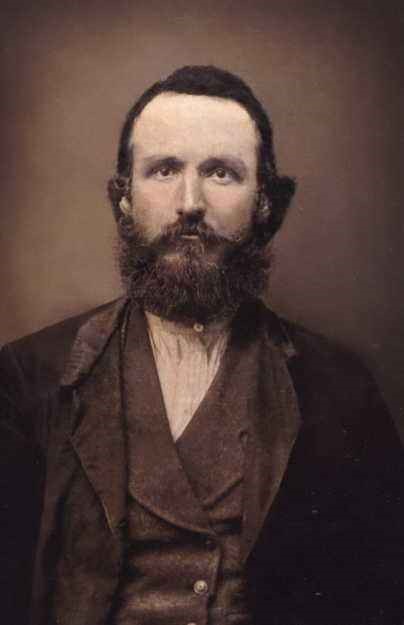
James S. Causey was born in 1812 to Solomon Causey and Margaret his wife in Guilford County, North Carolina. The best evidence of his lineage was presented in Chapter 5. James S. Causey and family are is listed on the 1860, 1870, and 1880 U.S. Census. In each of them his estimated date of birth is 1812. He would have reached his majority in 1833. There is scant evidence of the middle name Solomon for James S. Causey. However, his first daughter Mary E. married John Marion Roberts. As teenagers they had lived next door to each other in Fulton, Mississippi and were married there in Fulton, Mississippi by their Methodist Lay Elder Samuel B. Dykes. Their first born son was named Solomon Josiah Roberts, presumably after his grand-father James Solomon Causey. Based on this fact as well as oral family history and the fact that my grandfather’s name is John Solomon Causey, I am presuming the middle name for my Great-Great Grandfather, James S. Causey to be Solomon.
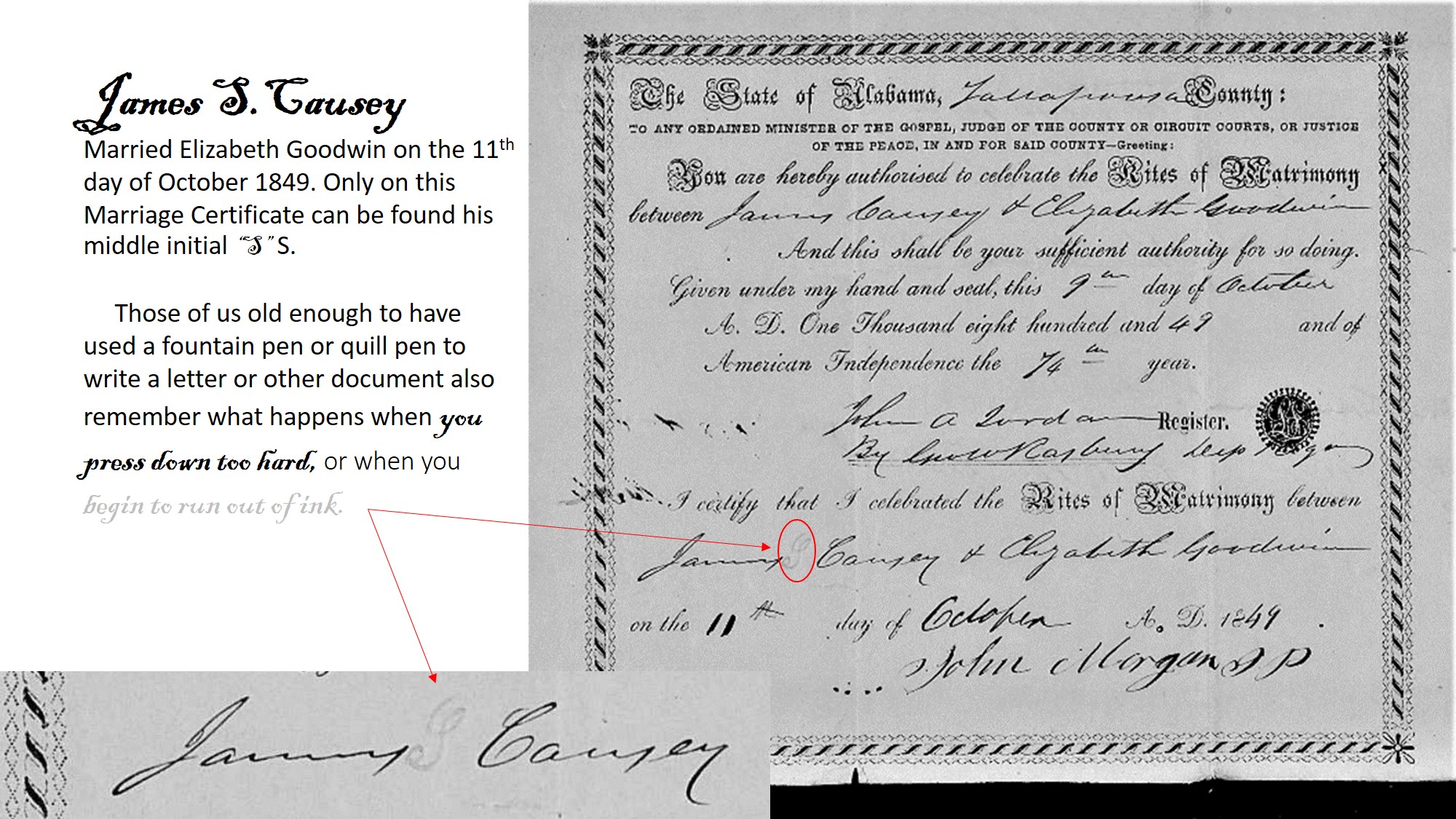
I have yet to find any record of James S. and Elizabeth Causey from the date of their marriage until 1860. Since they had no land in Tallapoosa County and children were beginning to fill their home, they began their search for greener pastures. The 1860 US Census found them in north central Alabama at Cedar Plains in Morgan County, Alabama having produced three children, Jonathan (Benjamin), Mary E., James (O.), and Martha E. Causey.
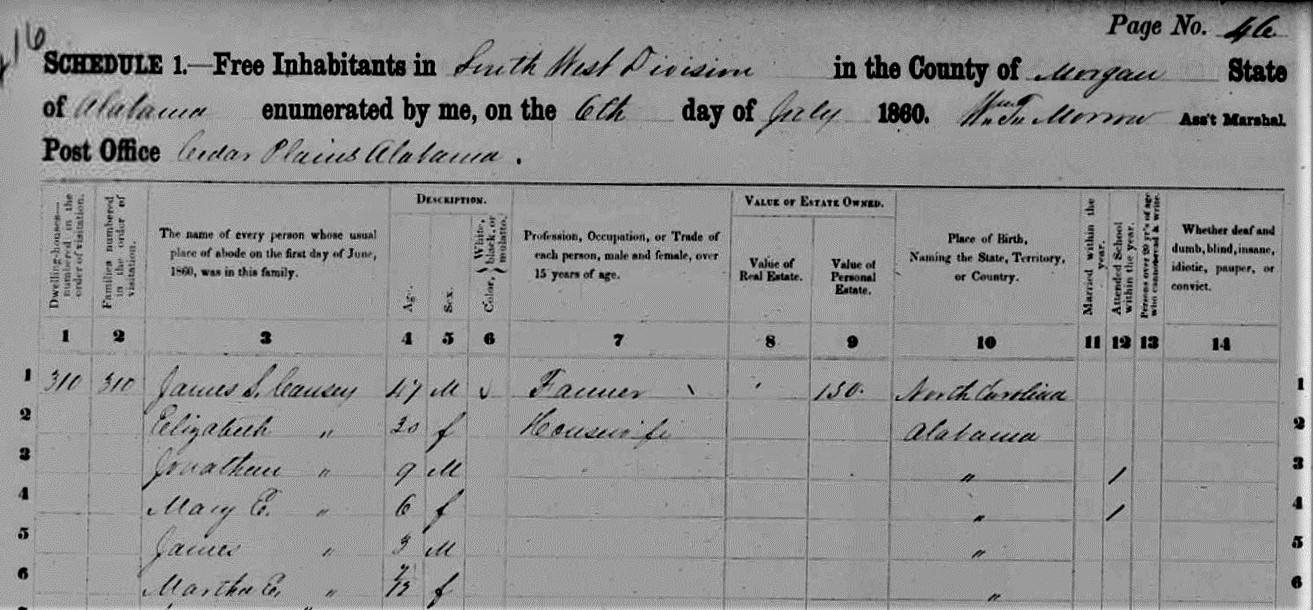
I have been unable to find any deeds or other Probate Court documents that might shed light on the status of the family while in Morgan County, Alabama. I assume James S. Causey was providing for his family as a share-cropper as much of the post-Civil War population of the South. Sharecroppers were perpetually kept at subsistence level dependent on the local land owners who owned a General Store where the sharecropper could purchase food, clothing, seed, fertilizer and just about anything always on credit. At the end of a “good year” the sharecropper might break even or even have a little extra for Christmas. But, most years were less than good with continued debt.
The 1870 U.S. Census finds our 2rd Great Grandfather James S. Causey had moved the family to Township 9 (the city of Fulton), Itawamba County, Mississippi. They also had added two more girls to the family, Sarah and Jane. It is at this point I find it important to discuss the impact of relationships on the history of the Causey family. Based on interpretation of families listed on the decennial US Census and associating them with family moves and marriages of children, we can piece together a social framework of interdependence of these families. Benjamin Causey was born about 1850 to James S. Causey and Elizabeth Goodwin, who themselves were married only a year earlier in Tallapoosa County, Alabama. Benjamin is listed on the 1860 US Census as Johnathan Causey living with James and Elizabeth in Cedar Plains, Morgan County, Alabama. Then on the 1870 Census the family had moved to Fulton, Itawamba County, Mississippi; on which census he is listed as Benjamin Causey. Interestingly, two other families are listed on this same census in the same neighborhood where Benjamin’s family lived: Stephen B. Dykes family, and Nancy and Elizabeth Roberts family, including John. This is an important linkage. James S. Causey and wife Elizabeth were Methodist. Stephen B. Dykes was apparently their Lay Elder pastor and probably also that of the Roberts family.
James S. and Elizabeth had six children: Benjamin, Mary E., James O., Sarah Catherine, Martha Elizabeth, and Malissa Jane. John Marion Roberts lived next door to Mary Causey in Fulton, Mississippi where they fell in love and were married 16 January 1873. Elder Stephen B. Dykes probably conducted the marriage ceremony.
In the mid-1870s Stephen B. Dykes and family moved to Fayette County, Alabama near White Springs United Methodist Church which is several miles south of Winfield, Alabama. The Causey family followed. It was there that James O. Causey married another “neighbor girl” Mildred Elizabeth Malloy.
The ceremony also performed by Lay Elder Stephen B. Dykes. The next year, September 26, 1880 F. B. (Benjamin) Causey married “the preacher’s daughter” Nancy Jane Dykes. Stephen B. Dykes, Lay Elder at White Springs Methodist Church also performed this ceremony. On a personal note, I found on line* a reference to a letter dated May 18, 1916, from Nancy Jane Dykes to her Aunt Maud Dykes Hallman, she writes, “I have not heard from your Uncle Henry (Dykes) nor Mac (Andrew M Dykes) either in a long time. You wanted to know what denomination “Mac” belonged to — he is a Methodist and your grandpa (Stephen B. Dykes) was a Methodist preacher, so we are Methodist.
We now know that Johnathan Benjamin Causey could actually have the name Johnathan Benjamin Franklin Causey or some other variation of that combination. In fact, Nancy Jane Dykes, his wife, listed on her Social Security Application her spouse as “Frank Causey.” But, what about after the marriage. As many of you know the 1890 US Census was lost. So, we don’t have much information about where Benjamin and Nancy Causey lived after their marriage. We also know that sometime between 1887 and 1900 Benjamin Causey passed away. In 1900 US Census, Nancy was living close to White Springs Church. She, her mother Smithie J. Dykes, and children Sarah J, Stephen F. and Henry A., were listed at dwelling 39, No. 11, Brown Precinct, Fayette County, Alabama. Nancy is listed as a widow and with her mom there indicates she had lost both her husband and father in the previous several years. Young Henry A. Causey was born about 1888 which would indicate that his father Benjamin died sometime between 1788 and June of 1900.
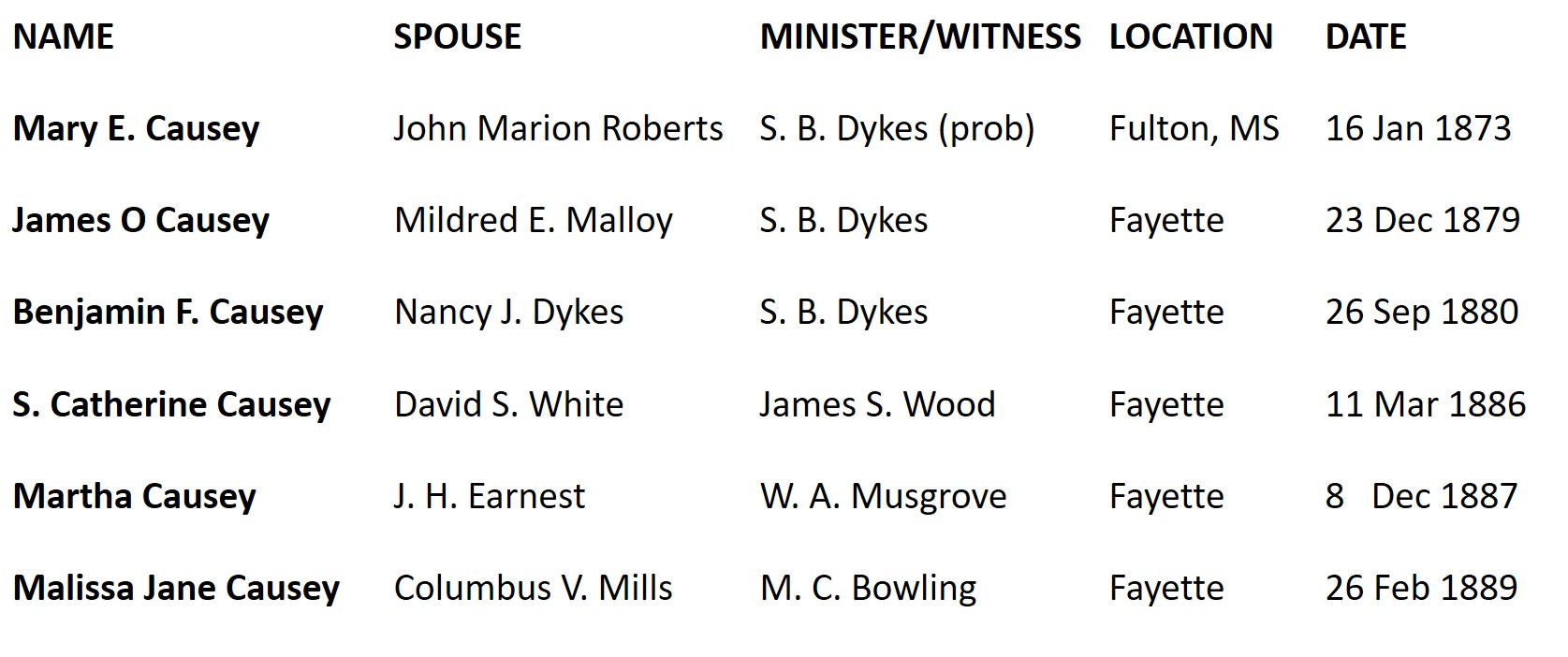
In the following table can be seen how the “neighborhood” impacted social relationships. Neighbors were close and supportive in helping with each other’s plantings and harvests, with building homes and barns, sharing stories on hot southern evenings, and worshipping at the nearby Church. Neighborhood children played together and worked in the cotton fields together. They also found love and marriage in the neighborhood.
But, back to James S. and Elizabeth Goodwin Causey in Itawamba County, Mississippi in 1870. Documents also survive that can depict the socio-economic status of families. Death and Taxes are said to be two things you can count on. As far as surviving documentation of the lives of folks in the south in the 1800s, tax documents are easier to find than death certificates. On the 1870 US Census James S. Causey listed the value of Real Estate at $100 and Personal Estate at $200. This would suggest that he probably had purchased some property there. Contrary evidence might also be offered in the form of Mississippi Property Taxes. In 1870 James S. Causey declare one cow and one mule as his only personal property and was taxed a total of Fifty Seven Cents.
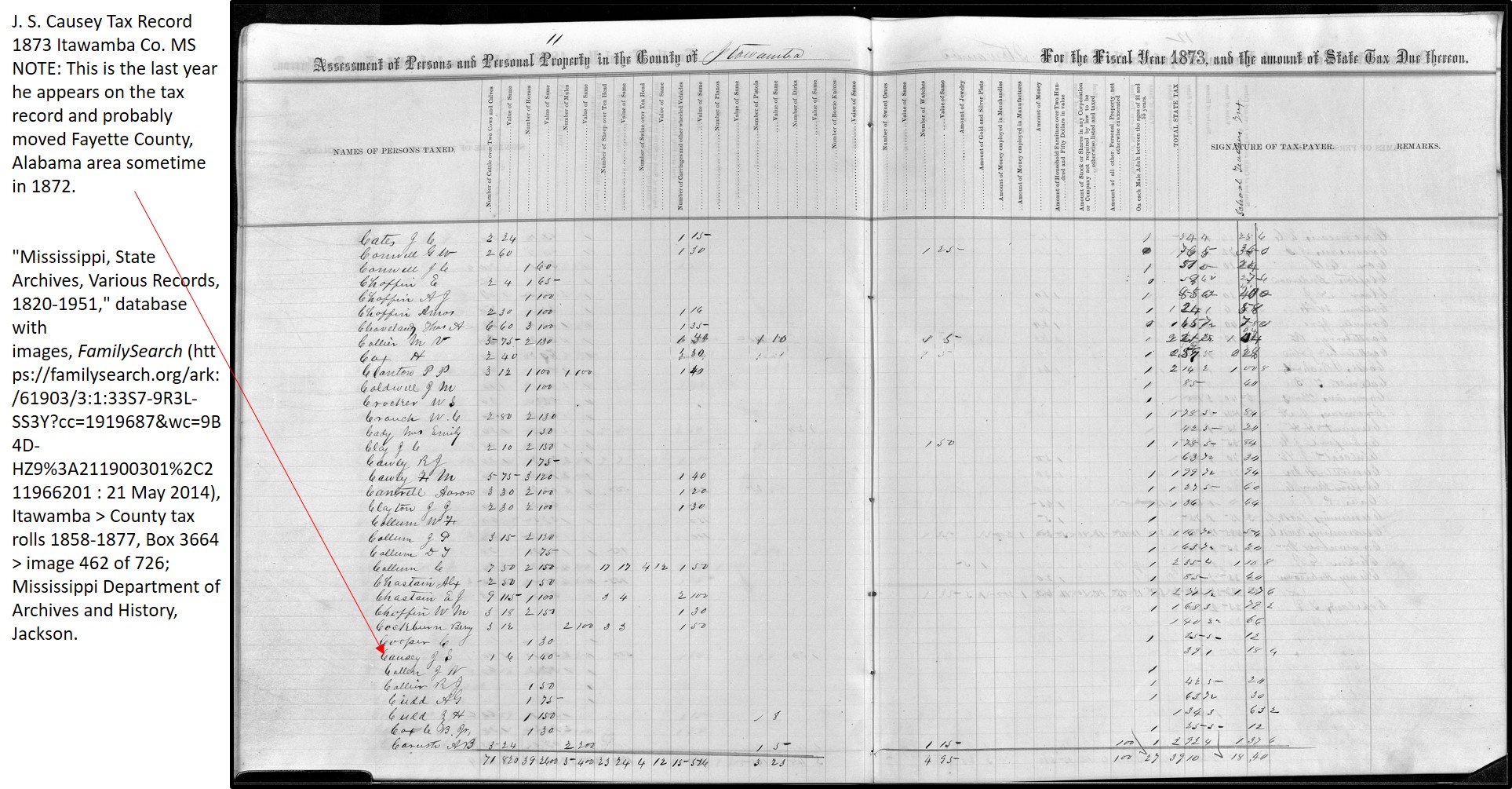
The rambling James S. and Elizabeth Goodwin Causey didn’t end in Fulton, Mississippi. They followed Rev. Stephen Dykes to White Springs United Methodist Church in Fayette County Alabama where several of their children met new neighbors. As I stated earlier, it appears that James S. Causey had no special trade but was a sharecropper continually hoping to work hard enough, to finally get ahead and maybe settle down on some small acreage of his own. This was not to happen. James S. Causey’s final appearance in this life is found in the 1880 US Census still living with his faithful wife Elizabeth still at his side. He was 68 and legally blind*. His daughter and son in law John Marion Roberts living next door and three of his daughters still at home. Benjamin and Jim O. were fairly close by and visited frequently. By this time James S. was 68 years old and blind. The hope of a better future here on Earth only dying embers. I have hope that he and I will meet again soon in that home in heaven where he has settled down forever.
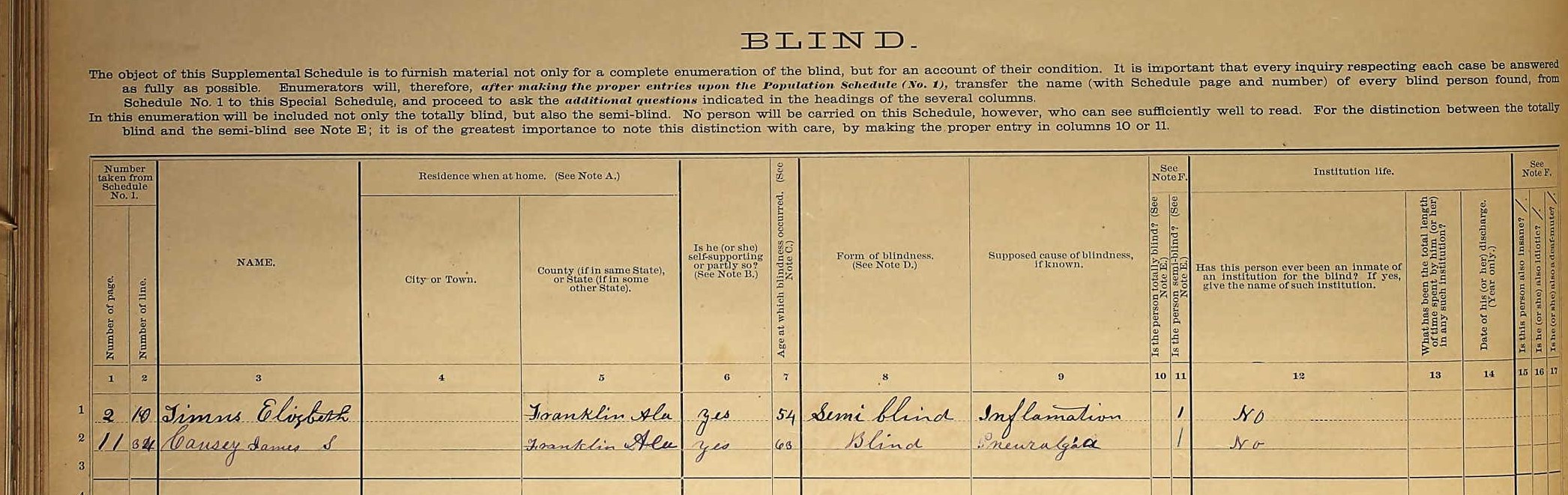
Franklin County, Alabama
Shown below is Jim O. Causey, wife Mildred Elizabeth, and youngest daughter Mary Darthula b. 1892
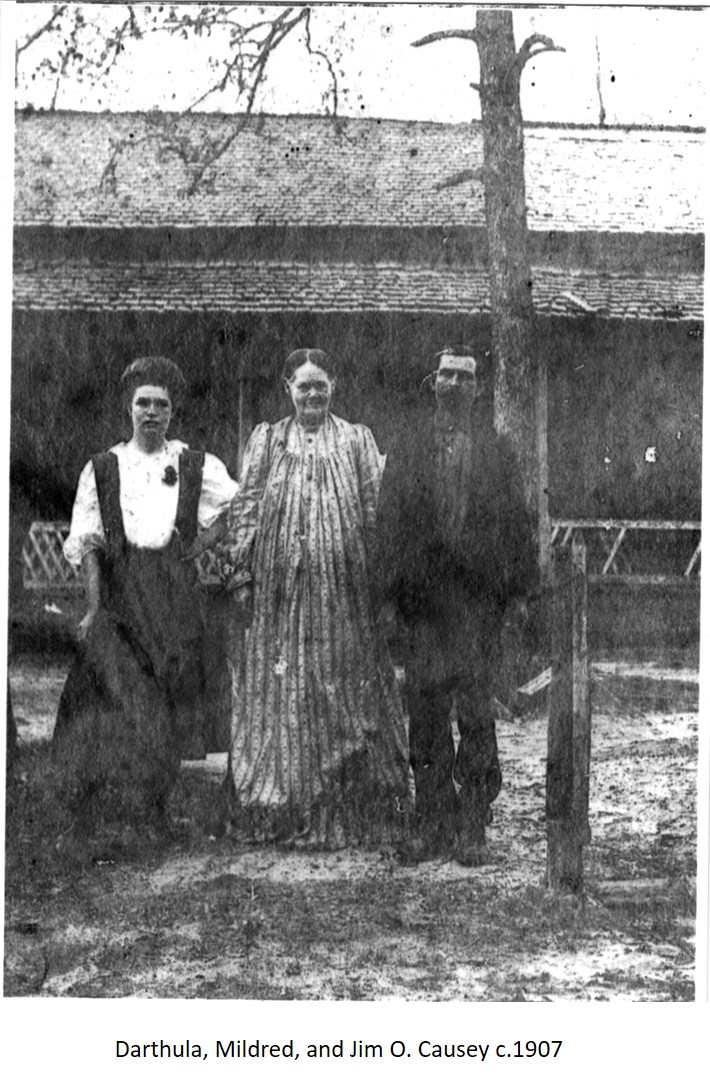
Great-Grandfather Jim O. Causey, James S. and Elizabeth Causey’s second son, married Elizabeth Malloy in 1879 in Fayette County, Alabama. The old dog-trot house where this picture (above) was taken is still standing. The house was built by my Great Grandfather Jackson Mozingo on his return from the Civil War. In fact he had originally built it close to the creek but after the war had moved it up the hill and closer to the road. I spent many wonderful days in my early youth exploring the house and barns. All kind of ancient treasure were found. In the loft of the barn were cotton cards and a spinning wheel, even a loom. Horse collars, plow lines hung inside the barn while harrows, called “JoHarrs” as I recall, and a couple of plows left in the yard. But that’s another story. Jim O. and Elizabeth Causey lived a short distance from the Mozingo place. Of course my grandfather John S. Causey, one of their sons, was courting one of Jackson Mozingo’s seven daughters, Lilly Adeline Mozingo. Back then courting led to marriage in almost all cases.
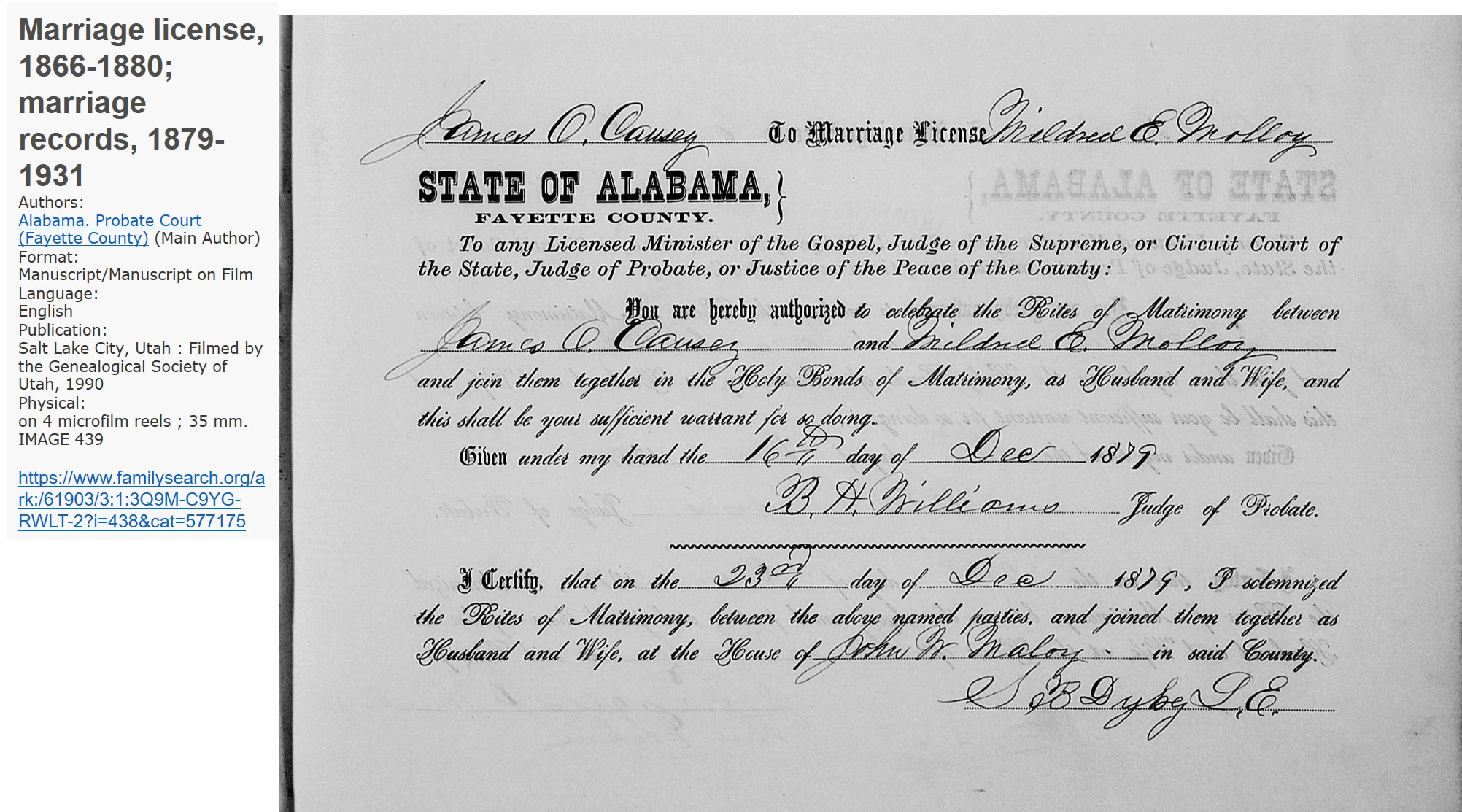
A review of what I know of James O. “Jim” Causey is that he was born in 1857 to James S. and Elizabeth Goodwin Causey either in Tallapoosa County or Morgan County, Alabama. It was 1879 at 22 year old James O. Causey met at the alter to receive his bride Mildred Elizabeth Malloy, the girl who lived down the red dirt gravel road. They were married by Elder Stephen B. Dykes at the home of John W. Malloy, her father, which was near White Springs Methodist Church . In 1880 they lived two houses down, probably a couple of miles from Mildred’s father John W. Malloy and Stephen B. Dykes and family. As was James S. Causey, Jim O. farmed. He too was probably a sharecropper. As I stated earlier, after the war thousands sold their property for what they could get and moved west as far as Texas and New Mexico. In many cases their home and land were purchased by wealthier middle class town folk. These businessmen then rented out the homes and “shared” with the poor farmers who worked the land, the profits from the cash crops, (almost always King Cotton), each year. When the crops were in they would settle up the rent and supplies purchased on credit. Little was ever left for improving their lot. But, sharecropping did work to the advantage of young couples with little or no education, inheritance, or other stake in life. And, there was almost always family and neighbors to help.
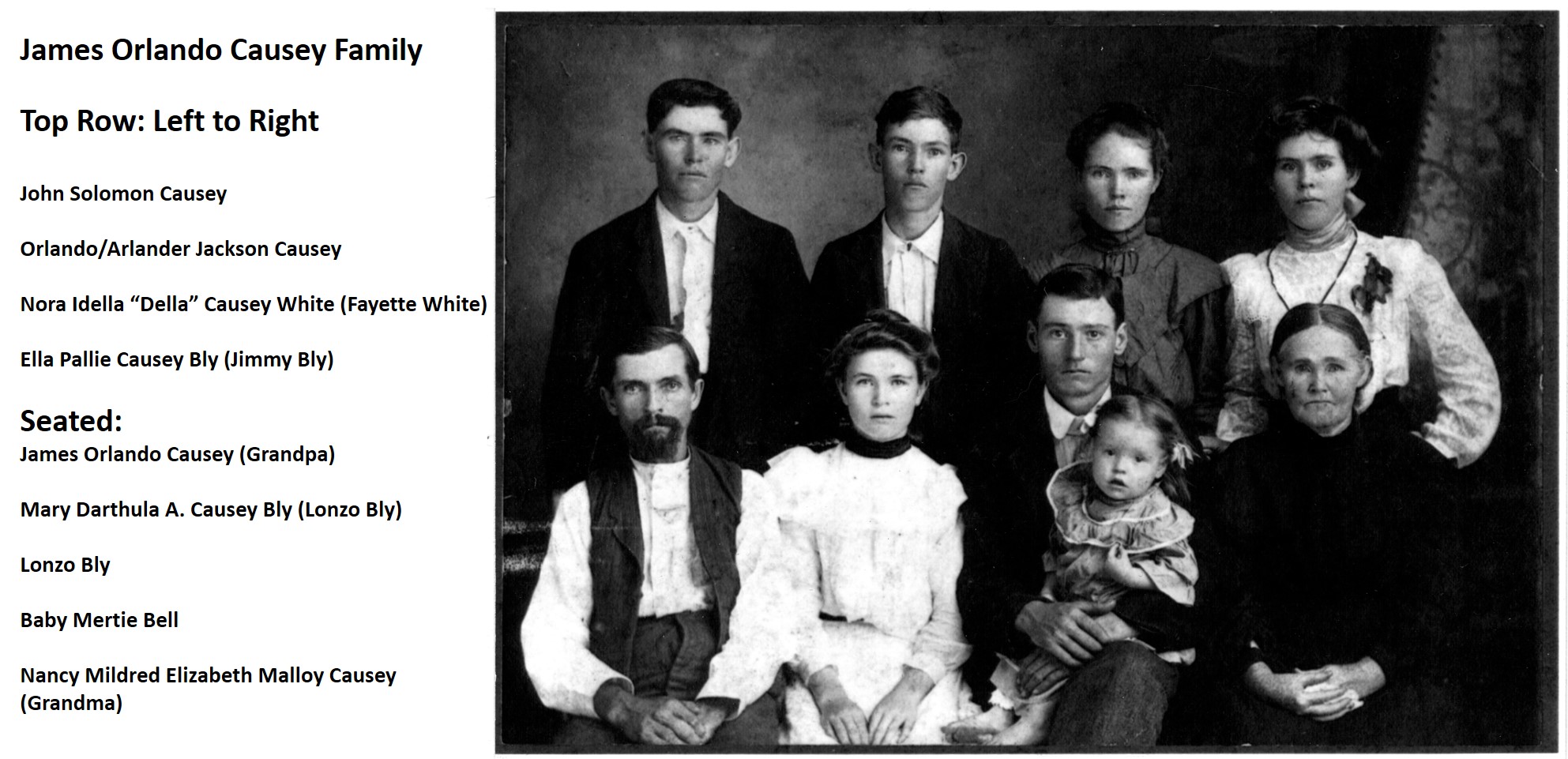
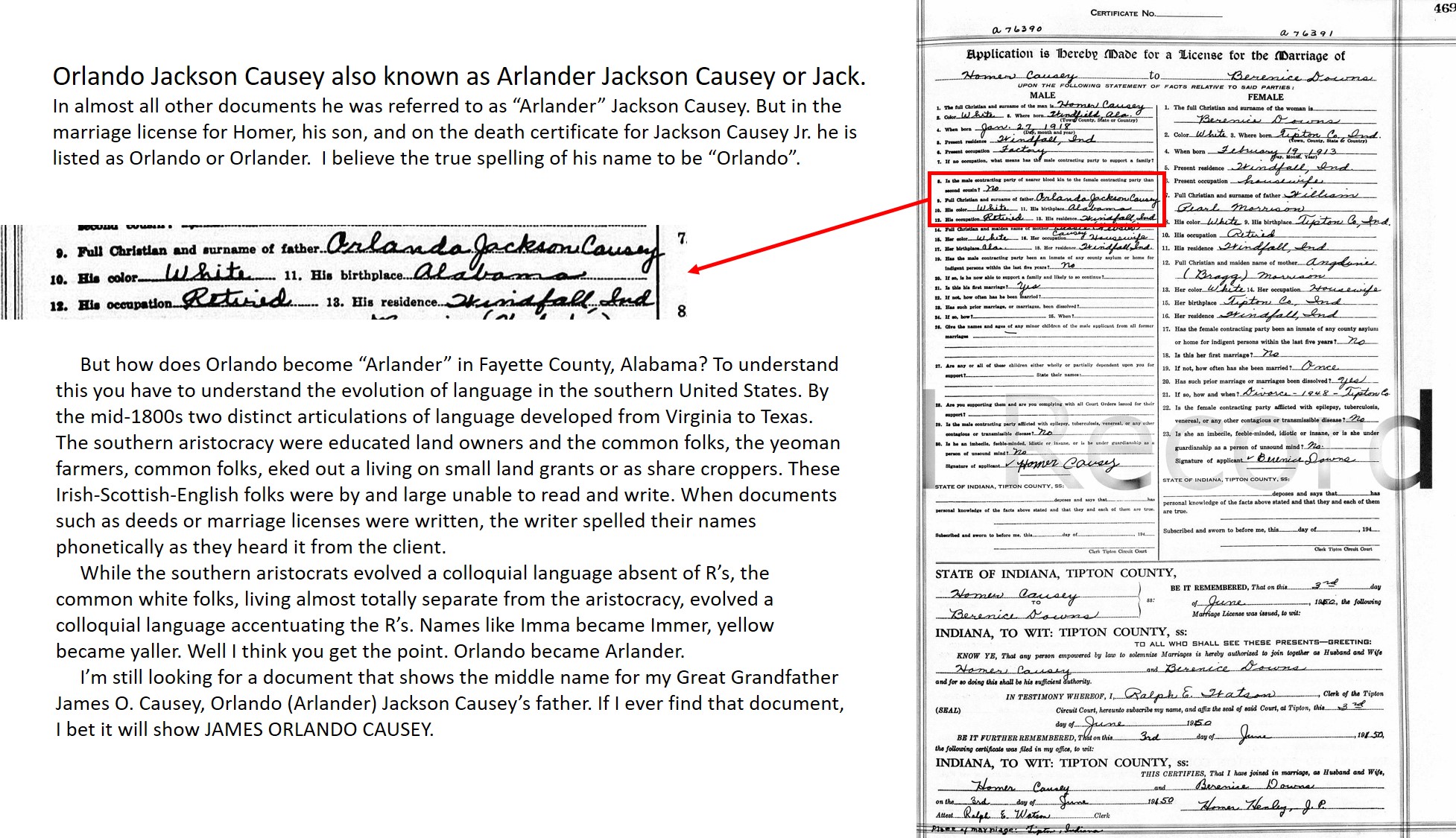
Children were born to Jim and Nancy over the next several years. John S. Causey was their first child born in 1882. He was followed by Nora Idella, “Della” in 1884, Ella Pallie in 1887, then Orlando Jackson, “Uncle Jack” in 1888, (I’m fairly certain “Orlando” was Jim’s middle name but have not been able to document it) and finally Mary Darthula A. in 1892. Regarding the middle name “Orlando”, I know Uncle Jack Causey was called Arlander Jackson Causey. But, two of his children Homer and Junior show his name as “Orlando or Orlander” on documents:
James Orlando and Nancy Mildred Elizabeth Malloy Causey lived a quiet life together for 45 years there in Fayette County near where I was born, a place called Glenn Allen. Weeks, months, and years past with breaks for Sunday-School and Church, then daylight till dark working the corn and cotton fields, milking the cow, slopping the hogs, chopping wood for the stove. I can see Nancy carding cotton, spinning course thread then feeding it into the ancient loom. My Grandmother Lilly Mozingo Causey had one of those heavy bed spreads hand-made probably on that same loom. Jim O. lost his bride January 27th, 1924. She is buried there in the White Springs cemetery.
Her stone is marked incorrectly as “M R CANSEY WIFE OF J O CANSEY.” But we know that this memorial is for us to remember “Grandma Nancy, Jim’s wife.”
Great Grandfather James O. Causey spent his last few year with his family in and around White Springs Church, Hubbertsville, Glenn Allen, and Winfield. By 1930 he had moved in with his oldest son John S. Causey. I’m sure he spent lots of time mentoring the seven sons of John S. and Lilly A. Causey my grandparents. Grandpa Jim O. Causey left this world on the 27th of December 1931. He is buried next to Mildred.


Leave a Reply